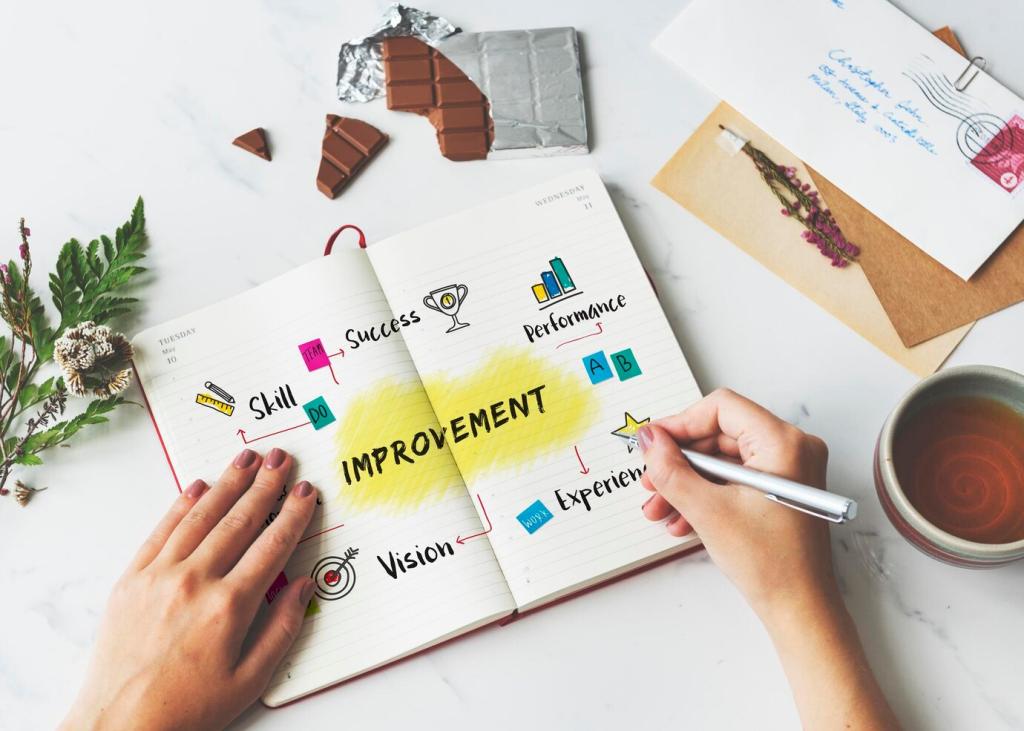

Unlocking the Growth Mindset: Strategies for Personal Development

Welcome! Today’s chosen theme is “Unlocking the Growth Mindset: Strategies for Personal Development.” Dive into ideas, stories, and practical tools that help you learn faster, bounce back stronger, and turn everyday challenges into stepping stones. Share your goals in the comments and subscribe to keep your growth journey vibrant and consistent.

From Fixed to Growth: What Mindset Really Means

Neuroscience shows our brains rewire through focused effort and feedback. When you practice deliberately, neural pathways strengthen, making new skills feel natural. Embrace mistakes as signals for adjustment rather than evidence of limits, and progress compounds.

From Fixed to Growth: What Mindset Really Means

A student stuck at average shifted one phrase: “not yet.” With weekly reflections and small practice goals, she improved steadily. By semester’s end, the same kid who avoided challenges volunteered presentations, discovering effort and strategy mattered more than talent.
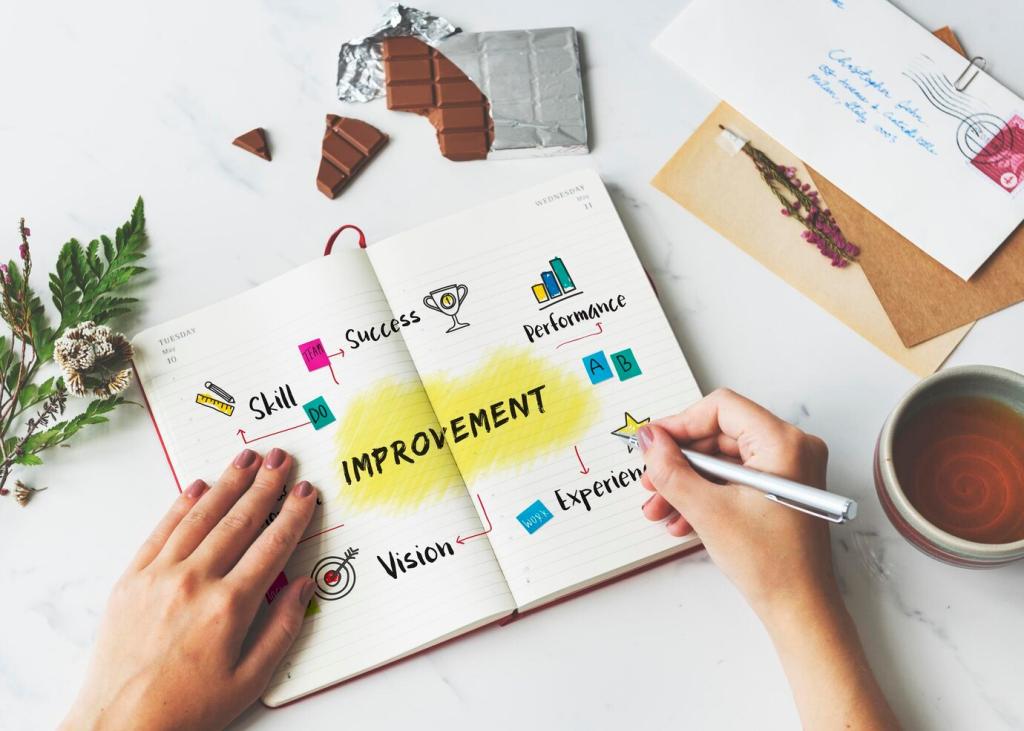
Language Shifts That Rewire Your Self-Talk

Transform “I’m not good at this” into “I’m not good at this yet.” That single word opens space for learning, experimentation, and patience. It also lowers perfectionism, allowing you to collect feedback without treating it as a verdict on your identity.

Language Shifts That Rewire Your Self-Talk

Praise choices, strategies, and effort over innate ability. Try, “Great persistence on the difficult section,” rather than, “You’re so smart.” This keeps motivation stable when tasks intensify, because identity remains anchored to controllable behaviors and repeatable practices.

Systems Over Willpower: Designing Habits That Stick

Start with actions so small they feel almost laughable, like reading two pages or practicing one exercise. Celebrate completion loudly. Momentum builds identity, and identity sustains behavior when enthusiasm dips and distractions appear at inconvenient moments.

Systems Over Willpower: Designing Habits That Stick

Decrease friction for good habits and increase it for unhelpful ones. Lay out materials the night before, silence nonessential notifications, and keep your tools visible. Conversely, hide distractions, adding extra steps that make mindless drift less tempting.

Deliberate Practice: Turning Effort into Expertise

Instead of “become better at public speaking,” choose “open with a story and maintain eye contact for ten seconds per point.” Clear targets generate measurable feedback and make wins visible, keeping your growth mindset fueled by tangible progress indicators.

Deliberate Practice: Turning Effort into Expertise

Aim for tasks just beyond current comfort—challenging but achievable. Too easy breeds boredom; too hard invites avoidance. Track difficulty levels, adjust weekly, and ask a coach or peer to highlight specific weaknesses you can practice with intention.

Run a Gentle Post‑Mortem

After a disappointment, list three controllable factors you can refine. Avoid blame or harsh judgments. Identify one experiment that addresses the most influential factor, then schedule it promptly so learning replaces rumination and restores forward momentum.

The Two-Minute Reset Ritual

When frustration spikes, step away briefly. Breathe slowly, reset posture, and reread your growth statement. Return with a smaller task and a specific timer. Resets prevent spirals, preserving energy for consistent, deliberate action aligned with your goals.

Story Editing: Authoring a Kinder Narrative

Name the old story, like “I always choke,” then write a revised version grounded in evidence: “Under pressure, I adapt with preparation and practice.” Share it with us to cement the shift and encourage others pursuing personal development.

Mindset at Work: Cultures That Grow People

Psychological Safety Fuels Smart Risks

Teams grow faster when people can admit uncertainty and ask for help without fear. Normalize framing problems as learning opportunities, log experiments, and praise thoughtful attempts. Over time, curiosity becomes contagious, driving sustainable performance improvements and trust.

Manager as Coach, Not Judge

Swap generic evaluations for forward-looking coaching. Offer specific, behavior-focused feedback and co-create experiments. Celebrate rigor and iteration as much as outcomes, ensuring teammates associate effort with progress rather than anxious perfectionism or rigid compliance demands.

Metrics That Motivate Progress

Track leading indicators like practice hours, drafts completed, or feedback loops closed. These metrics guide action directly. Review results weekly, treating misses as data that inform the next sprint and reinforce a growth mindset across your personal development.

Self-Compassion Multiplies Persistence

Criticism can paralyze; compassion restores courage. Speak to yourself like a coach who recognizes effort and suggests adjustments. This mindset nurtures persistence during plateaus and keeps long-term goals emotionally rewarding rather than exhausting or fear-driven.

Stress Inoculation Through Mini-Challenges

Practice tiny exposures to discomfort—cold showers, quick presentations, or timed constraints. Calibrated stress builds capacity without burnout, training your nervous system to interpret challenge as useful, not threatening, and strengthening personal development over time.
Gorabetsitesi
Privacy Overview

This website uses cookies so that we can provide you with the best user experience possible. Cookie information is stored in your browser and performs functions such as recognising you when you return to our website and helping our team to understand which sections of the website you find most interesting and useful.